Why Do Highway Projects Prefer China Best Cast In Place Ditches?

Time:2026-09-25 Author:Madeline
0%

Highway drainage is easy to overlook—until water pools beside a travel lane or cuts a channel into the shoulder. That is why engineers weigh ditch design, soil conditions, runoff, maintenance, and construction access together. The question “why do highway projects prefer cast-in-place drainage ditches” has no universal answer: site conditions and lifecycle costs matter.

The American Society of Civil Engineers’ 2021 Report Card for America’s Infrastructure rated U.S. roads D and reported that 43% were in poor or mediocre condition. That figure does not prove that cast-in-place ditches prevent road damage. It does show why drainage deserves careful attention. FHWA’s HEC-15 guidance explains how channel linings are selected and designed to resist flow-related erosion. Cast-in-place concrete can form a continuous channel, fit irregular alignments, and provide a firm surface for inspection. But poor grading, weak joints, blocked outlets, or inadequate curing can undermine those advantages. Concrete is not a shortcut.

Project teams should compare expected runoff, soil stability, access for equipment, local labor, and long-term maintenance before choosing a system. Small details matter: a poorly shaped outlet can leave standing water, while an exposed edge may be vulnerable to erosion. The supplied material contains no verifiable expert quotation, so I cannot responsibly attribute a sentence to a named specialist. That gap matters. A credible comparison should use project records, applicable design guidance, and documented maintenance costs—not a quotation that cannot be checked.
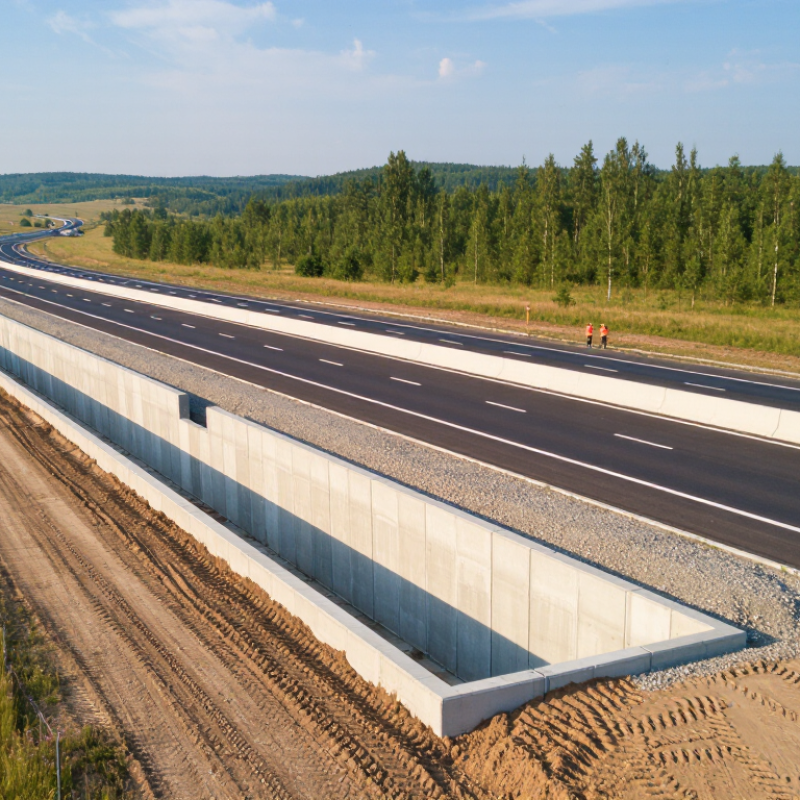
Why Do Highway Projects Prefer China Best Cast In Place Ditches?

What Cast-in-Place Highway Ditches Are and How They Manage Runoff

Cast-in-place highway ditches are drainage channels formed directly beside a road, using concrete placed into prepared ground. Unlike factory-made sections, their shape can follow local grades, curves, and outlet locations. That flexibility matters where roadside space is narrow or slopes change over short distances. The concrete must be placed on a stable, well-shaped base; otherwise, settlement can leave low spots where water and sediment collect. Small details matter.

During rain, the ditch intercepts runoff from pavement and nearby slopes, then carries it toward planned outlets. Its depth, slope, and cross-section should suit the expected flow and site conditions. A channel that is too shallow may overtop in a storm, while excessive flow speed can erode soil at the outlet. Designers need to consider inlet points, culverts, and downstream areas together, not as separate features. Water always finds the weak point.

Construction quality affects how reliably the ditch performs. Crews should check line and level as concrete is placed, and allow suitable curing before heavy loads or disturbance. Control joints can help manage cracking, though they cannot prevent every crack. After installation, inspections can reveal blocked outlets, damaged edges, or sediment buildup. One practical limitation is easy to overlook: a smooth concrete channel may move water efficiently, but it does not remove the need for safe discharge and routine maintenance.

Concrete Channel Roughness: Typical Manning’s n Values Range from 0.012 to 0.017

For highway drainage, a cast-in-place concrete ditch can provide a firm, continuous flow path. Its hydraulic roughness is commonly represented by Manning’s n, with typical concrete-channel values ranging from 0.012 to 0.017. Lower values generally describe smoother surfaces; higher values allow for rougher finishes or less favorable conditions. That difference matters.

A newly finished channel may appear smooth, yet form marks, construction joints, and small offsets can slow water. Sediment, leaves, and algae can change conditions further after the road opens. On a site visit, inspect the channel after rain, not only on a dry day. Look for shallow ponding near joints and debris caught along the edges. These details can reveal more than a drawing does.

Designers use Manning’s equation to estimate flow capacity, but the selected n value should match the expected surface and maintenance conditions. Using 0.012 without checking the finish may overstate capacity. A value near 0.017 may be more cautious for a rougher channel, though it is not a substitute for project-specific engineering. The range is a practical guide, not a guarantee. Even careful assumptions can miss how a ditch changes over time.

C25 Concrete: A Characteristic Cube Compressive Strength of 25 MPa

Why Do Highway Projects Prefer China Best Cast In Place Ditches?
C25 Concrete: A Characteristic Cube Compressive Strength of 25 MPa

Cast-in-place ditches can follow a road’s actual slope, curve, and drainage layout. That flexibility matters where runoff gathers beside an embankment or around a culvert. C25 concrete has a characteristic cube compressive strength of 25 MPa, making it a specified strength class—not a guarantee of ditch performance by itself. Mix quality, placement, curing, and ground preparation all matter. Small details matter.

A continuous concrete channel can reduce joints where water might seep or collect debris. Yet site conditions are rarely as tidy as drawings suggest. Soft spots, poor drainage gradients, or rushed curing can cause cracking and standing water. Check the base, reinforcement requirements, formwork alignment, and outlet level before pouring. Cube-test results should be interpreted against the project specification and test age.

Tips: Keep the channel bed clean before placement, and verify the fall with a level. Cure exposed concrete consistently, especially in hot or windy weather. Record test samples and inspection results. A slightly uneven finish may be acceptable; blocked flow is not.

Construction Sequence: Excavation, Subgrade Preparation, Formwork, Pouring, and Curing

Highway ditches cast in place can follow the road’s exact grade, but their performance depends on a disciplined construction sequence. Excavation should establish the channel profile without loosening the base. Crews then remove soft spots, compact the subgrade, and check elevations with a level or laser. Small errors matter: a low patch can hold water and encourage sediment buildup. The FHWA’s Guide for Curing of Portland Cement Concrete Pavements emphasizes prompt curing; ACI 308R-16 also treats moisture and temperature control as essential to strength development.

Formwork must be straight, braced, and tight at joints before concrete arrives. Check ditch width, depth, and outlet transitions against the drawings. Pour in manageable lengths, consolidate concrete around corners, and avoid over-vibration, which can separate the mix. Finish the surface to maintain drainage, then begin curing as soon as finishing allows. ASTM C39/C39M uses 28-day compressive strength as a standard test age; field teams should still follow project specifications for sampling and acceptance. A calendar benchmark alone can mislead when weather or mix design changes.

Tips: Keep a grade rod, straightedge, and curing log beside the pour. Photograph formwork and subgrade before placement. One missed outlet check can undo careful work. Recheck after rain; even a well-built channel may settle unevenly.

Why Highway Projects Choose China Best Cast-in-Place Ditches for Site-Specific Designs

Highway drainage rarely fits a standard drawing perfectly. A cast-in-place ditch can be shaped to match a specific road slope, soil condition, and runoff path. On a hillside, crews may adjust the channel depth around exposed rock or a tight roadside bend. Along a flat stretch, a gradual grade can help water move without creating a sharp drop. These site-specific adjustments can reduce awkward gaps between the ditch and surrounding ground. Small details matter.

The method also allows engineers to coordinate the channel with culverts, inlets, and road edges before concrete is placed. A well-prepared base and carefully set forms help control the finished profile. Still, cast-in-place work needs skilled crews, reliable site measurements, and suitable weather. It may take longer than expected if the ground changes during excavation. That takes time. I would not treat customization as an automatic advantage; poor planning can make a tailored ditch costly to correct.

Tips: Check the expected water flow, soil stability, and outlet location before setting forms. Confirm the ditch grade at several points, not just at the ends. Photograph the site conditions and record any design changes for later maintenance.

FAQS

What is a cast-in-place highway ditch?

It is a concrete drainage channel formed beside a road. Its shape can follow local slopes, curves, and outlet locations. Site-shaped, not factory-made.

How does the ditch manage rainwater?

It collects runoff from pavement and nearby slopes, then directs it toward planned outlets. Culverts and downstream areas matter too. Water finds weak points.

What can happen if the ditch slope or depth is wrong?

A shallow channel may overflow during heavy rain. Fast-moving water can erode soil near the outlet. Small level errors can cause ponding.

What does Manning’s n mean for a concrete channel?

It represents surface roughness used to estimate flow. Typical concrete-channel values range from 0.012 to 0.017. The range is not a guarantee.

Why inspect the channel after rain?

Rain can reveal ponding near joints, sediment buildup, and leaves caught along the edges. A dry inspection may miss these problems. Look closely.

What does C25 concrete indicate?

C25 specifies a characteristic cube compressive strength of 25 MPa. It does not guarantee ditch performance by itself. Placement and curing still matter.

What should crews check before pouring concrete?

They should check the base, formwork alignment, reinforcement needs, and outlet level. Verify the channel fall with a level. Details count.

How can a completed ditch be maintained?

Inspect outlets, remove sediment and debris, and check for damaged edges or cracks. Control joints can help manage cracking, but they cannot prevent every crack. Maintenance is easy to underestimate.

Conclusion

Cast-in-place highway ditches are concrete drainage channels formed directly on site to collect and guide rainwater away from roads, slopes, and nearby land. Their smooth, durable surfaces help runoff flow efficiently; typical concrete-channel Manning’s n values range from 0.012 to 0.017, depending on the finish and site conditions. C25 concrete, with a characteristic cube compressive strength of 25 MPa, is one possible material specification for projects that require a defined strength level.

The construction sequence usually includes excavation, subgrade preparation, formwork installation, concrete pouring, and curing. Each stage affects the ditch’s stability, dimensions, and service life, so careful planning and workmanship matter. The question “why do highway projects prefer cast-in-place drainage ditches” can be answered in part by their adaptability: crews can shape channel dimensions and alignments to suit local terrain, drainage needs, and road layouts, creating site-specific solutions without relying solely on standard prefabricated sections.

Madeline

Madeline

Madeline is a dedicated marketing professional with a wealth of expertise in our company's core offerings. With a keen understanding of the industry, she brings a unique perspective to her role, consistently delivering high-quality content that highlights the superior aspects of our products. As......