Choosing a ditch lining is not merely a shape preference. It affects hydraulic capacity, soil protection, construction access, and long-term maintenance. The key question is how to choose between U shape and trapezoid ditch lining under real site conditions.
Professional guidance supports a site-specific decision. The U.S. Federal Highway Administration’s HEC-15 report evaluates channels through flow velocity, boundary shear stress, slope, and lining durability. The U.S. Army Corps of Engineers’ EM 1110-2-1601 also stresses that channel geometry must match design discharge, sediment behavior, and erosion risk. These principles matter in small farm drains and large roadside systems. A U-shaped section usually offers a smooth hydraulic path and compact width. It can suit narrow corridors, steep sites, and areas needing easier cleaning. Yet, curved forms may require specialized molds and careful joint control. That increases installation complexity.
A trapezoid ditch generally provides broader side slopes and simpler earthwork. It may be practical where land is available and heavy equipment needs clear access. The USDA NRCS National Engineering Handbook, Part 650, recommends considering soil conditions, freeboard, side-slope stability, seepage, and expected maintenance. Those details are easy to overlook. They should not be.
This guide compares both profiles through hydraulic performance, concrete or geosynthetic requirements, construction cost, safety, and maintenance frequency. Local rainfall records and verified flow calculations should guide the final selection. No single lining wins everywhere. In practice, the best answer may change after a soil test, a survey, or one unexpected storm.
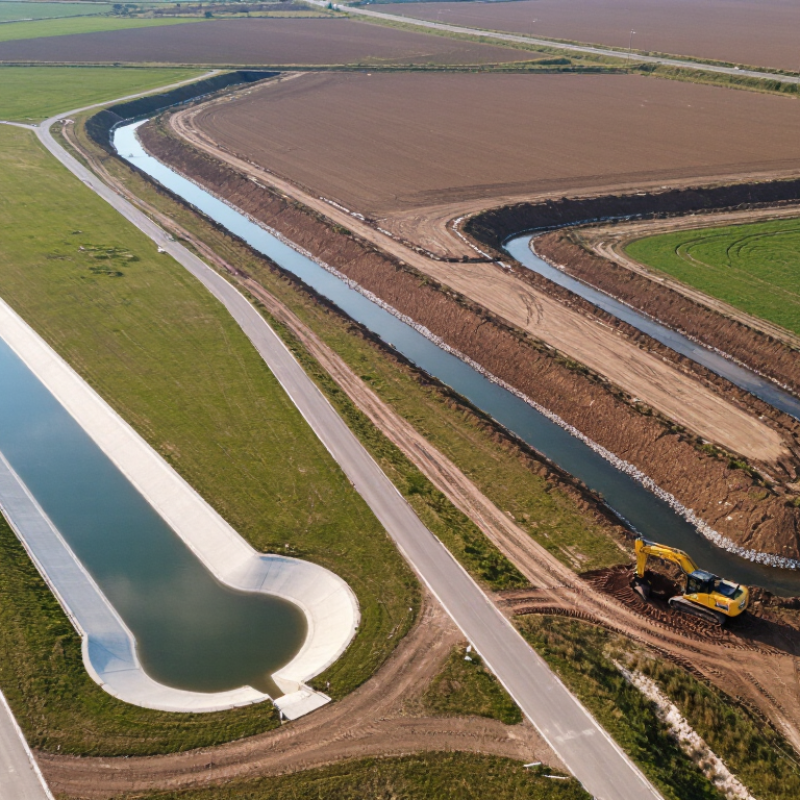
U-Shaped and Trapezoid Ditch Linings: Basic Structures
A U-shaped ditch lining has a rounded channel with continuous curved sides. Its structure guides water through a narrow, smooth path. This shape often works well where the ditch width is limited. The curved bottom also reduces sharp corners, where sediment may collect. However, accurate forming is essential. Small construction errors can affect the intended flow depth.
A trapezoid ditch lining has a flat bottom and two sloping sidewalls. Its wider upper opening provides more hydraulic capacity and easier access for inspection. The side slopes also reduce pressure on the lining when the surrounding soil is stable. This structure is common beside roads, fields, and large drainage corridors. It needs enough land for its wider footprint. That detail is easy to overlook.
In practice, engineers compare flow rate, soil conditions, available space, and maintenance needs. A U-shaped section may require less surface area, but cleaning equipment must match its curved profile. A trapezoid section is simpler to measure and repair, although its corners can hold debris. Reinforced concrete, geosynthetic layers, or compacted bedding may support either structure, depending on site conditions. I once underestimated surface runoff during a seasonal storm. The original section looked adequate, but water reached the lining edge. Local rainfall records and a careful freeboard allowance would have improved the design.
Compare Hydraulic Capacity and Flow Characteristics
How to Choose Between U Shape and Trapezoid Ditch Lining?
Compare Hydraulic Capacity and Flow Characteristics
Hydraulic performance depends on cross-section, slope, roughness, and allowable water depth. A U-shaped ditch has a curved wetted perimeter. This geometry often provides a strong hydraulic radius within limited widths. It can carry steady flows efficiently when depth is controlled. A trapezoid ditch uses a wider base and sloped sides. Its capacity increases easily by widening the channel. However, shallow flow may spread across the base and reduce efficiency.
Manning’s equation helps compare expected discharge, velocity, and water depth. For the same slope and lining roughness, the better shape depends on the available footprint. U-shaped sections usually guide water smoothly through curves and transitions. Trapezoid sections may handle expanding flows more naturally. They also offer easier access for inspection and sediment removal. In practice, abrupt transitions can create turbulence, even when calculations look acceptable. That detail is easy to underestimate.
Tips: Check peak flow, normal flow, freeboard, and permissible velocity together. Inspect the outlet carefully. A fast jet can damage downstream soil or lining. Review sediment behavior after heavy rain, not only during dry-season measurements. U-shaped lining may need accurate forming and careful joints. Trapezoid lining may need wider land and stronger side support. Neither option wins every site. Field conditions often challenge the first design.
How to Choose Between U-Shape and Trapezoid Ditch Lining?
Hydraulic capacity comparison based on Manning’s equation for a semicircular U-shaped channel and a trapezoidal channel with a 0.8 m bottom width and 1.5H:1V side slopes. Both channels use concrete lining with Manning’s roughness coefficient n = 0.015 and a longitudinal slope of 0.5%.
Interpretation: The trapezoidal section generally provides greater discharge capacity at deeper flow levels because its cross-sectional area expands rapidly with depth. The U-shaped section offers a hydraulically efficient wetted perimeter and smooth flow transition, which can be advantageous where space, erosion control, or maintenance requirements are important.
Evaluate Soil Conditions, Slopes, and Available Space
Choosing between a U shape and trapezoid ditch lining starts with the soil beneath your boots. Clay soil may shrink and crack after drying, while loose sand can erode around the lining edges. Organic or filled ground often settles unevenly. That movement can damage a rigid section, even when the concrete appears strong. A U-shaped lining usually handles curved water flow efficiently and suits narrow channels. It may need careful side support in weak soil.
Slope conditions also control the decision. Steep slopes increase flow speed and create stronger pressure on joints and outlet areas. A trapezoid section generally provides broader side slopes and better resistance against sliding. It can be easier to inspect and repair after heavy rainfall. However, it requires more land. In a restricted roadside corridor, that extra width may be impractical. A U shape can fit tighter spaces, but its curved form demands accurate forming and consistent bedding.
Measure the available width before selecting a section. Check groundwater, soil moisture, and signs of previous settlement. Small cracks near nearby structures deserve attention. An experienced site engineer can compare flow depth, lining thickness, and drainage details under local conditions. Field measurements are often more useful than a standard drawing. I have seen projects focus on shape while overlooking poor subgrade preparation. That mistake is expensive, and sometimes avoidable.
Review Construction Methods, Durability, and Maintenance
How to Choose Between U Shape and Trapezoid Ditch Lining?
Construction method affects both ditch performance and future maintenance. U-shaped lining uses curved, prefabricated, or cast-in-place sections. It offers consistent geometry and suits narrow corridors with controlled water flow. However, lifting equipment and accurate joint alignment are essential. Trapezoid lining usually requires more excavation, but its sloped sides simplify grading and accommodate wider channels. The Federal Highway Administration’s HEC-22 guidance lists finished concrete roughness values commonly around 0.012–0.018, depending on surface condition. Small surface defects can still increase resistance.
Durability depends on water velocity, soil movement, joint treatment, and concrete quality. Hydraulic design manuals from the U.S. Army Corps of Engineers stress checking velocity, erosion risk, drainage, and freeboard together. A strong lining can fail when groundwater pushes beneath it. Poorly compacted subgrade is a quiet problem. Reinforcement, expansion joints, and sealed construction joints deserve field inspection, not just drawing approval. Curved U sections have fewer exposed side edges, which may reduce weed growth and sediment pockets. Trapezoid channels provide easier access for cleaning and repairs, especially with wider maintenance paths. That advantage matters.
Maintenance records should track cracking width, joint opening, settlement, blocked outlets, and sediment depth. A practical inspection cycle is after major storms, then at least annually. This is not excessive. Climate changes can make old flow assumptions unreliable. The choice should follow hydraulic calculations, site access, soil investigation, and local maintenance skills, rather than shape preference alone.
Choose the Best Lining for Project Requirements
How to Choose Between U Shape and Trapezoid Ditch Lining?
Choose the Best Lining for Project Requirements
A U-shaped lining suits narrow corridors and steady water depths. Its curved base reduces dead corners, where sediment often collects. This geometry can also improve hydraulic efficiency when the channel is properly sized. The Federal Highway Administration’s HEC-22 lists finished concrete Manning’s roughness values commonly near 0.012–0.015. That range supports accurate capacity checks, but workmanship still matters. Rough joints can offset theoretical gains.
Space is decisive.
A trapezoid lining fits wider sites with gradual side slopes. It is often easier to construct beside roads, farms, and drainage reserves. Its broader top width can reduce water depth during peak flow. However, it may require more land and stronger slope protection. FHWA HEC-15 emphasizes checking permissible shear stress, lining stability, and erosion risk. Velocity alone is not enough.
Project conditions should guide the selection. Use the U shape when land is limited, maintenance access is controlled, and flow depth changes quickly. Consider a trapezoid when excavation space is available and side-slope inspection is practical. The USDA NRCS National Engineering Handbook recommends evaluating discharge, roughness, slope, freeboard, and soil conditions together. That principle is easy to overlook.
Small errors become expensive.
Site drainage, joint spacing, and foundation preparation deserve equal attention. A theoretically efficient section can fail if settlement opens cracks. The better choice is the lining that matches actual construction limits, not only the drawing.
FAQS
Clay may shrink and crack after drying. Loose sand can erode around lining edges. Filled ground may settle unevenly. A rigid section can fail despite strong concrete. Soil testing matters more than appearance.
A U-shaped lining suits narrow corridors and controlled water flow. Its curved base leaves fewer corners for sediment. It can fit beside a crowded road. Accurate forming and steady bedding are essential.
A trapezoid lining suits wider sites with available excavation space. Its sloped sides are easier to grade and inspect. It can reduce water depth during peak flow. More land is required.
Steep slopes increase flow speed and joint pressure. Trapezoid sides may resist sliding more effectively. U-shaped sections need careful support in weak soil. Outlet areas deserve extra inspection.
Measure corridor width, channel length, slope, and expected flow depth. Check groundwater, moisture, and previous settlement. Look for small cracks near nearby structures. Field measurements can expose problems early.
U-shaped sections need accurate lifting, alignment, and joint treatment. Trapezoid channels usually need more excavation. They often provide easier access for cleaning and repairs. Wider maintenance paths help.
Compact the subgrade carefully before placing concrete. Inspect reinforcement, expansion joints, and sealed construction joints. Groundwater can push beneath a strong lining. This quiet problem is easy to miss.
Inspect it after major storms and at least once each year. Record crack width, joint openings, settlement, blocked outlets, and sediment depth. A small crack may become costly. Do not trust old flow assumptions completely.
Conclusion
Choosing the right drainage channel begins with understanding the basic structures of U-shaped and trapezoid ditch linings. U-shaped linings have a curved, compact profile that can guide water efficiently and reduce sediment accumulation, while trapezoid linings provide a wider base and sloped sides that may accommodate greater flow volumes. To determine how to choose between U shape and trapezoid ditch lining, assess the expected discharge, flow speed, soil stability, channel slope, and available construction space. Site conditions are especially important: narrow or urban areas may favor a U-shaped design, while broad land and variable water levels may support a trapezoid layout.
The decision should also consider construction requirements, durability, and long-term maintenance. Review installation access, reinforcement needs, resistance to erosion, cleaning methods, and future repair costs before selecting a lining. A practical choice balances hydraulic performance with local ground conditions, project budget, service life, and maintenance resources, ensuring the ditch remains stable and effective throughout its intended use.

 MRECH Machinery