Understanding how does a ditch lining machine work begins with the prepared canal surface, not the machine itself. Before operation, crews remove loose soil, trim the ditch profile, and check the required lining thickness. Small errors here can create weak edges, uneven coverage, or later cracking.
According to irrigation equipment specialist Dr. Wei Jian, “A ditch lining machine succeeds when material control, ground preparation, and operator judgment work together.” His observation reflects practical field experience. The machine usually receives concrete or mortar from a hopper, guides it through a forming system, and spreads the material along the ditch bed and sidewalls. Vibrators or compacting components help reduce air pockets. Adjustable molds then shape the channel into a consistent profile.
The process looks simple.
It is not always simple.
China’s leading ditch lining machines differ in feeding systems, drive methods, mold designs, and automation levels. Some models suit narrow farm channels. Others handle wider irrigation projects with stronger conveying capacity. Operators must also consider concrete slump, travel speed, lining thickness, and site temperature. These details directly affect surface quality and curing performance.
This guide examines ten notable Chinese ditch lining machines and explains their working principles in practical terms. It also compares production capacity, adaptability, maintenance demands, and likely project applications. Technical brochures can sound impressive, but field results may vary. That limitation deserves attention. A machine with high output is not automatically the best choice for every ditch, soil condition, or construction team.
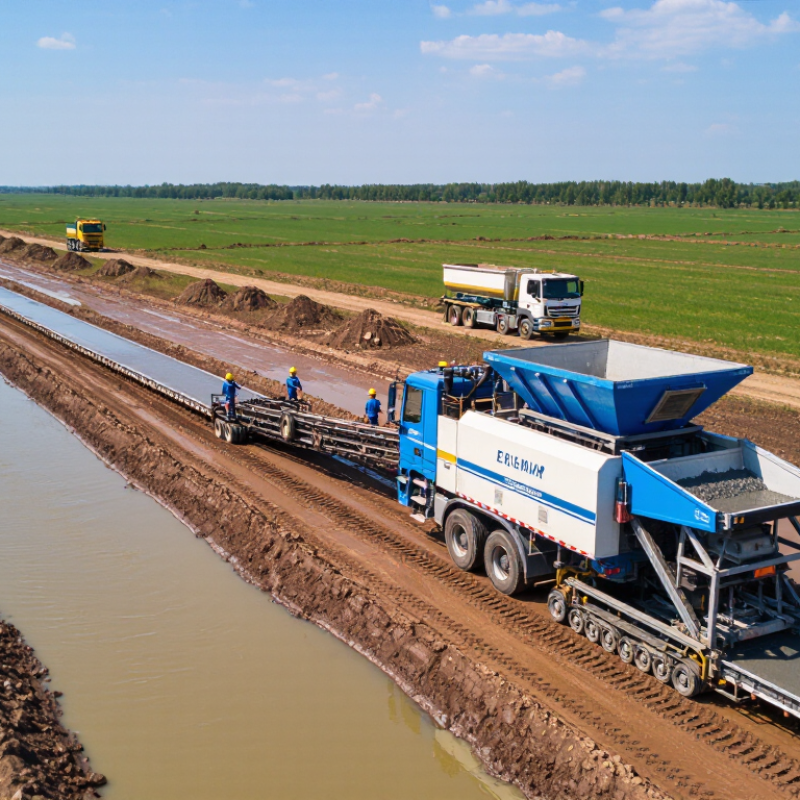
A ditch lining machine shapes and compacts concrete or other lining material along a prepared channel. Its forming system follows the ditch profile, creating a more consistent surface than many manual methods. This helps address seepage, soil erosion, weed growth, and frequent maintenance. Crews still need to check the soil, water flow, and channel dimensions before work begins. A machine cannot fix a poorly designed ditch.
The scale of water demand makes conveyance losses important. FAO’s 2021 State of the World’s Land and Water Resources for Food and Agriculture reports that agriculture accounts for about 72% of global freshwater withdrawals. Lining can reduce seepage where the ground is permeable, but results depend on design, installation, and upkeep. Cracks or weak joints may still leak. That detail is easy to overlook.
Tips: Check the ditch grade and soil moisture before lining. Keep the channel edges clean, and inspect joints after curing. Measure water flow before and after installation; local results matter more than a machine’s rated output.
China’s ditch-lining machines are designed to place concrete or compacted material along a prepared channel. Their structure usually includes a supporting frame, a material-feeding system, and a shaping section. On a concrete model, a hopper supplies the mix while a moving form shapes the channel bed and side slopes. The machine’s width and forming angle must match the ditch profile. Small details matter.
These machines can be classified by lining method, mobility, and channel shape. Slipform units shape freshly placed concrete as they travel, while other systems use fixed forms or separate paving and finishing steps. Some machines move on tracks, which can help on uneven ground; compact units may suit narrower channels and restricted sites. Classification also considers whether the machine forms a U-shaped, trapezoidal, or rectangular section.
The labels do not tell the whole story. Soil condition, slope, water access, and concrete consistency affect performance, so operators still need to check the site and adjust settings. A technically capable machine can produce poor edges if the base is loose or the feed rate varies. That part is easy to overlook. In practice, choosing a machine means matching its forming system to the channel, not simply comparing output figures.
A ditch lining machine turns an uneven canal into a controlled hydraulic surface. The process starts with preparation. Survey crews check the canal profile, soil strength, moisture, and required lining thickness. The machine then trims high spots and removes loose material. Some models use augers, vibrating screeds, or compacting plates to create a stable base. Small errors matter. A few centimeters of uneven grade can disturb water flow.
During forming, concrete or another approved lining material enters a hopper and moves through a shaping mold. The mold follows the canal geometry, while hydraulic controls maintain width, slope, and thickness. Operators monitor slump, feed rate, and machine speed continuously. The Food and Agriculture Organization’s AQUASTAT data indicates that agriculture uses about 70% of global freshwater withdrawals. Better canal control can therefore protect a valuable resource, although lining alone cannot solve poor allocation or damaged structures.
Finishing begins immediately after forming. A vibrating beam closes surface voids, and hand tools correct edges, joints, and transition areas. Workers may add contraction joints before curing starts. The United Nations World Water Development Report identifies irrigation efficiency as a major water-management concern. Field records often show that curing receives less attention than placement. That is a mistake. Wind, heat, and premature drying can create hairline cracks. Machine settings are never perfect; operators still need judgment, inspection, and corrective work.
China Top 10 Ditch Lining Machines: How Do They Work?
Ditch lining performance depends on material selection, subgrade preparation, and machine control. FAO AQUASTAT reports that agriculture consumes about 70% of global freshwater withdrawals. Therefore, even narrow seepage paths can create serious seasonal losses. Slipform machines place concrete continuously, maintaining consistent width and thickness. Fiber-reinforced concrete can limit cracking around bends and expansion joints. However, reinforcement does not repair weak soil.
Geomembranes offer a lighter alternative. High-density polyethylene creates a low-permeability barrier, while geotextiles protect it from sharp gravel below. Field designs often combine both layers. A smooth membrane may reduce friction, but poor anchoring can cause wrinkles, uplift, or tearing. It looks finished. It may still fail.
Modern lining machines use laser or GNSS guidance to control elevation and side slopes. Automated screeds can improve thickness consistency, while sensors monitor concrete flow and compaction. The American Society of Civil Engineers recommends careful attention to joints, curing, and drainage because these details strongly influence service life. Industry testing under ASTM C1202 also treats very low electrical charge passage as an indicator of reduced concrete permeability. Yet laboratory results are not field guarantees. Dust, heat, rushed curing, and uneven subgrade remain practical weaknesses. Better data logging could expose these problems earlier.
Comparing China’s top ten ditch lining machines starts with the project, not the advertised output. On a farm drainage site, I check ditch width, depth, slope, soil moisture, and turning space. These details determine whether a slip-form, roller, or mold-based system is suitable.
Most machines guide fresh concrete through a shaped mold, then use vibration or a screed to create a smooth channel profile. A machine may line 500 meters daily in ideal conditions. Wet clay can reduce that figure sharply. Real conditions matter.
For irrigation channels, compare forming accuracy, concrete feed capacity, vibration quality, and thickness control. Ask for measured results, not only catalog numbers. A reliable machine should keep the channel profile consistent around corners and joints. I also inspect the hopper, screed, hydraulic system, and emergency controls before a field trial.
Simple maintenance wins. Spare-part access and operator training can affect long-term cost more than a low purchase price.
Fuel use, crew size, and transport width belong in the same calculation.
Different projects require different evidence. For a narrow rural ditch, compact dimensions may matter more than maximum output. For a long water-management contract, continuous feeding and automatic leveling can reduce labor.
Review trial records, concrete specifications, surface finish, and curing arrangements. Ask how the supplier handles design changes. This is often overlooked.
I would not trust a ranking without site data, independent measurements, and clear service procedures. Some comparisons remain imperfect because soil and weather change daily. Record that limitation before approving the machine.
It shapes and compacts concrete along a prepared ditch. A forming mold follows the channel profile. The result is usually more consistent than manual work.
Lining can reduce seepage through permeable soil. It can also limit erosion, weed growth, and repeated maintenance. Cracks may still allow leakage.
Check the ditch grade, width, depth, soil strength, and moisture. Measure the expected water flow. Remove loose soil and high spots. A machine cannot repair poor ditch design.
Fresh concrete enters a hopper and moves through a shaped mold. Hydraulic controls help maintain width, slope, and thickness. Vibration or a screed closes surface voids. Small errors matter.
Output depends on ditch size, concrete supply, machine speed, and crew skill. A machine may line 500 meters daily under ideal conditions. Wet clay, tight turns, or poor access can reduce production sharply. Catalog figures are not field promises.
Compare forming accuracy, feed capacity, vibration quality, and thickness control. Also check turning space and transport width. Spare parts and operator training affect long-term costs. A low purchase price may not stay low.
Heat, wind, and premature drying can create hairline cracks. Workers should inspect joints after curing. They should also correct edges and transition areas promptly. This step is often neglected.
No. Lining cannot fix poor allocation, damaged structures, or incorrect channel design. Water measurements before and after installation provide better evidence. Site results matter more than rated output. Comparisons remain imperfect.
Ditch lining machines are specialized construction systems designed to create durable, uniform channels for irrigation, drainage, and water management. They solve common problems such as soil erosion, water seepage, uneven surfaces, and slow manual construction. The question “how does a ditch lining machine work” can be answered through its basic process: the machine follows a prepared trench, receives concrete or another lining material, shapes it against the ditch profile, and smooths or finishes the surface as it moves forward. Some models are self-propelled, while others are tractor-mounted or designed for continuous slip-form operation.
China’s top ten ditch lining machines can be compared by structure, lining width, forming method, automation level, mobility, and production capacity. Their performance also depends on material selection and technology, including reinforced concrete, fiber additives, precise vibration, adjustable molds, sensor-assisted control, and curing methods. For different projects, buyers should consider channel dimensions, terrain, required lining thickness, transport conditions, maintenance needs, energy use, and total operating cost.

MRECH Machinery